
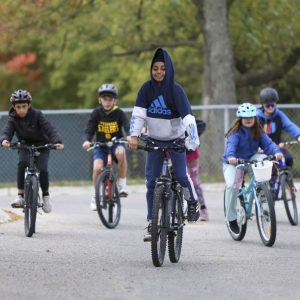
Did you know that cycling is one of the easiest ways to stay active and reduce pollution at the same time? Riding a bike helps improve physical health, supports mental well-being, and reduces the number of cars on the road, making communities safer and cleaner.
What is Safe Cycling
Safe cycling means riding a bike in a way that protects you and others on the road by following traffic rules, wearing proper safety gear, using the right equipment, and being aware of your surroundings. For students, cycling is a healthy, active, and independent way to get to school, but it needs to be done safely and with confidence.
Programs like “Cycle Safe” support students and families by providing bike racks, helmets, locks, lights, bells, and training resources. These tools remove common obstacles like theft, limited equipment, and safety risks, making cycling a more accessible option for school travel.
Developing safe cycling habits helps protect your health, improve road safety, and build a cleaner, more sustainable community.
Why are Safe Cycling Programs Important
Health
Cycling supports physical and mental well-being by promoting daily physical activity, reducing stress, and improving overall fitness. It is a low-impact activity that’s suitable for all fitness levels. For children, regular cycling helps build healthy habits early in life and supports long-term health.
Safety
Wearing helmets, using bike lights and bells, and learning road safety skills significantly reduce the risk of injury. Training and education increase confidence and preparedness, helping students ride more predictably in traffic. Bike racks and locks also reduce theft and encourage more students to bring their bikes to school.
Environment
Cycling produces zero emissions. By choosing bikes instead of cars for school trips, families help reduce air pollution, improve local air quality, and support climate-friendly transportation. More students cycling means fewer cars around schools, which also improves safety for everyone.
Community & Accessibility
Providing cycling supplies and education reduces financial barriers and makes active transportation more accessible. Safe cycling programs help families feel more confident about letting children bike to school and foster a culture of active, independent travel within school communities.
Resources
Why Cycle Lesson Plan
This lesson plan can be used to teach students about the benefits of cycling and why people choose to ride bicycles. It incorporates the following presentation and activity.
Why Cycle PowerPoint Brainstorm Activity
This presentation introduces the Why Cycle Brainstorm Activity and guides students through a small group brainstorming discussion about the benefits of cycling. Students brainstorm ideas and write them on sticky notes. As a class, students sort their ideas into categories: physical, mental, environmental, and other. This activity promotes discussion, teamwork, and critical thinking while helping students understand the wide range of benefits cycling provides.
Why Cycle? Video
Discover the many benefits of cycling in this short video—from improving physical fitness and boosting mental wellbeing to saving money and reducing your environmental impact. Whether you commute, exercise, or explore, cycling offers an accessible, sustainable, and rewarding way to get around.
Social Media
Utilize these social media resources to share some of the activities your classes are doing with your school community.