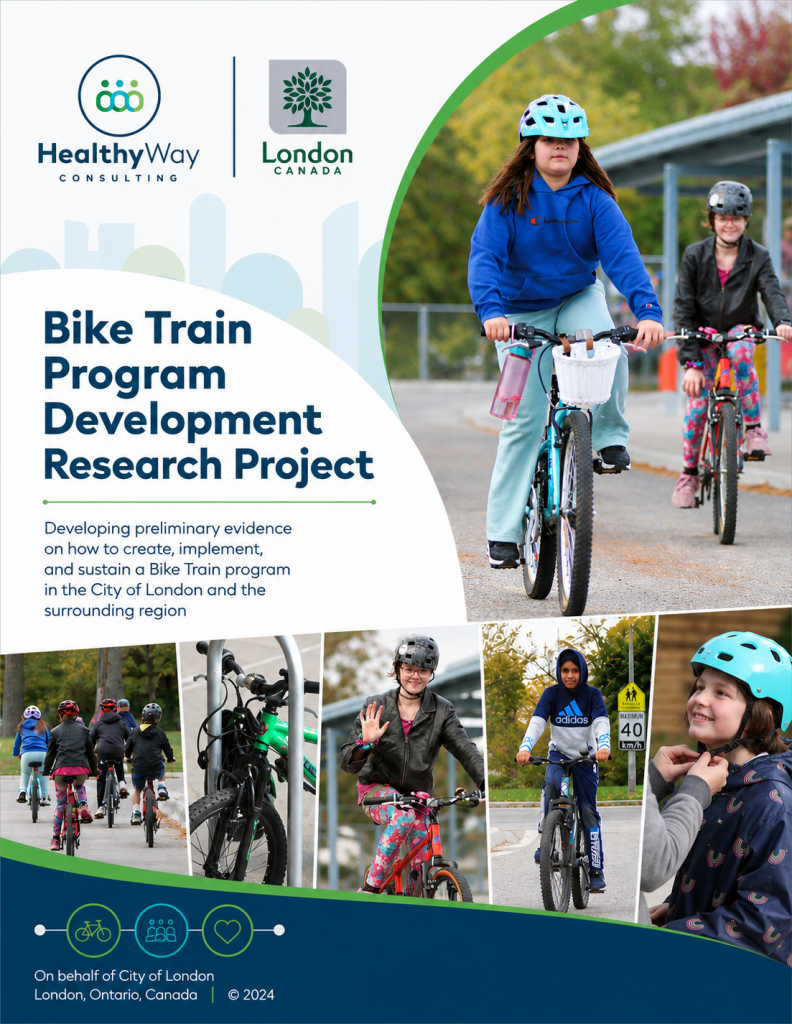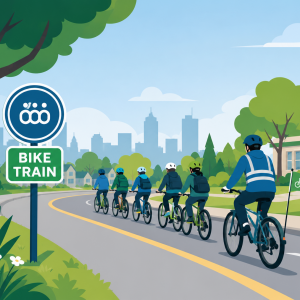
In response to London’s 2019 climate emergency declaration, the City aims to achieve net-zero emissions by 2050, with a focus on shifting transportation toward sustainable modes. Active school travel, including cycling, presents an opportunity to reduce emissions, alleviate traffic congestion, and improve children’s physical and mental health. This report explores the feasibility of implementing a Bike Train program—organized group cycling to school—in London, Ontario.
Using a literature review and expert consultations, the report identifies best practices and key challenges. Bike Trains help overcome barriers to active travel, such as safety concerns and lack of companionship, but require careful planning. Critical factors for success include strong community and parental involvement, clear communication, and well-designed routes that prioritize safety and accessibility.
Liability and insurance represent significant barriers, requiring formal risk management strategies such as waivers, training, and clearly defined roles for volunteers. School capacity and administrative support also influence program viability, though grassroots, parent-led models have proven effective.
The report recommends a phased, partnership-based approach involving a lead organization, pilot schools, and an implementation guide tailored to local conditions. Municipal support, equity considerations, and sustainable funding are essential for long-term success. Overall, Bike Trains offer a practical, scalable strategy to promote active transportation and support broader climate and public health goals.