
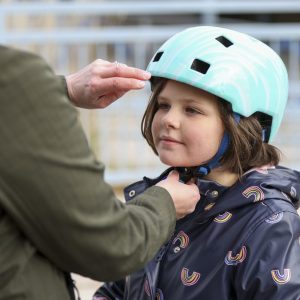
A helmet only protects properly when it fits correctly. Taking the time to ensure a secure and comfortable fit is essential for effective head protection. A properly fitted bike helmet should sit level, covering the forehead just above the eyebrows, with no significant movement in any direction.
Why Wear a Helmet
Did you know that children and youth under 18 are required by law to wear a helmet when cycling in Ontario. More importantly, head injuries can have life-long impacts, affecting how a child walks, talks, plays, and thinks. Wearing a helmet significantly reduces the risk of serious injury and helps keep riders safe.
Helmet Fitting 2-V-1
The 2-v-1 helmet fitting rule ensures that every helmet is fitted safely, correctly, and with the rider’s comfort in mind.
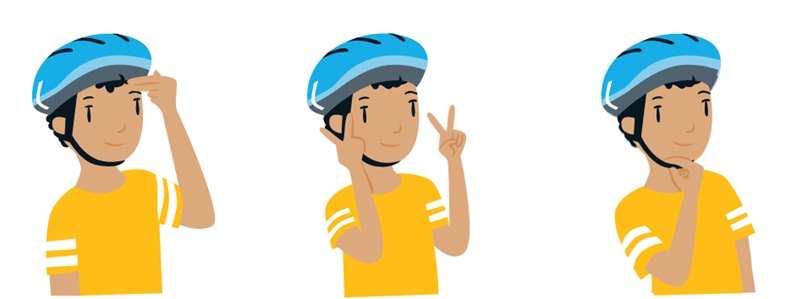
- “2”: Put the helmet level on the head, not tilting backward or forward Helmet should cover the top of the head and sit 2 finger-widths above your eyebrows. Adjust the fit of the helmet by adding or repositioning the foam pads. Move the dial or other fitting devices so it fits snug.
- “V”: The side straps should meet to form a V below each ear If your helmet tilts back, tighten the front straps. If your helmet tilts forward, tighten the back straps.
- “1”: Fit no more than one 1 finger between chin and fastened strap. All helmets should fit close to your head. Shake your head up and down and side to side – the helmet should not move.
Resources
Helmet Safety & Fitting Lesson Plan
Students learn about the importance of wearing a properly fitted bicycle helmet to reduce the risk of head injuries.
Helmet Safety PowerPoint Presentation
This PowerPoint supports the Helmet Safety & Fitting Lesson by helping students learn why helmets are important and how to wear them correctly. Through guided discussion and visual demonstrations, students explore how helmets protect the brain, when helmets should be worn, and how to check for a proper fit using the 2-V-1 rule. The presentation also introduces basic concussion awareness and encourages students to develop safe cycling habits.
Helmet Safety Worksheet
The worksheet supports the Helmet Safety & Fitting Lesson by helping students understand how helmets protect the brain and how to wear one correctly. Following the lesson, students can apply their learning about the 2-V-1 rule by completing the worksheet. This helps students practice proper helmet fitting skills while building confidence and injury prevention awareness.
Helmets! Video
Discover the many benefits of cycling in this short video—from improving physical fitness and boosting mental wellbeing to saving money and reducing your environmental impact. Whether you commute, exercise, or explore, cycling offers an accessible, sustainable, and rewarding way to get around.
Social Media Resource
Post this social media content about the importance of wearing a helmet to avoid concussions to share with parents what your students are learning!